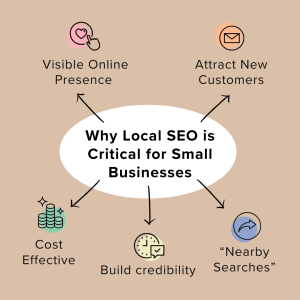
Why Local SEO is Critical for Small Businesses
In today’s digital world, local SEO has become a crucial strategy for small businesses aiming to compete with larger companies. With consumers increasingly using search engines to find local products and services, businesses must ensure their presence is visible online. Local SEO helps small businesses connect with potential customers in their area by optimizing for local search results. This targeted approach not only increases visibility but also drives more relevant traffic to a business’s website and physical location.
One of the key reasons local SEO is important for small businesses is the rise of “near me” searches. More and more consumers are using mobile devices to search for nearby services and products, from restaurants to retail stores. By optimizing for local SEO, businesses can appear in these local search results, ensuring they are front and center when potential customers are actively searching. Google My Business, location-specific keywords, and online directories play an essential role in improving local rankings, allowing small businesses to stay competitive against larger, more established brands.
Local SEO also improves a business’s credibility and trustworthiness. When a company appears in the top local search results, it is perceived as a reliable and trusted option. Positive reviews, accurate location information, and up-to-date business hours are vital elements of a strong local SEO strategy. These factors build trust with consumers, encouraging them to choose your business over competitors. By maintaining a consistent presence across local directories and maps, small businesses can further solidify their reputation as dependable and customer-focused.
Another advantage of local SEO is its cost-effectiveness. Unlike traditional advertising methods, local SEO offers a targeted approach that can yield high returns without a hefty price tag. By focusing on attracting local customers, small businesses can maximize their marketing budget while reaching the audience most likely to convert. The ability to reach the right people, at the right time, with relevant content makes local SEO a powerful tool for small businesses that need to make the most of their resources.
Ultimately, local SEO is critical for small businesses looking to grow and thrive in their communities. It helps them increase visibility, build credibility, and attract more customers, all while remaining budget-friendly. As consumers continue to rely on search engines to find local businesses, a strong local SEO strategy ensures that your business stays competitive and relevant in your area. Investing in local SEO is no longer optional—it’s essential for small businesses to succeed in today’s digital landscape.
Local SEO
Local SEO
Local SEO, Local SEO, Local SEO. Local SEO, Local SEO, Local SEO. Local SEO, Local SEO, Local SEO.
Local SEO, Local SEO, Local SEO. Local SEO, Local SEO, Local SEO. Local SEO, Local SEO, Local SEO.
Local SEO, Local SEO, Local SEO. Local SEO, Local SEO, Local SEO. Local SEO, Local SEO, Local SEO.
Local SEO, Local SEO, Local SEO. Local SEO, Local SEO, Local SEO. Local SEO, Local SEO, Local SEO.
In today’s visually driven world, branding is more than just a logo or a catchy tagline. It’s about creating a memorable experience that resonates with your audience, and illustrations have become a key part of that equation. Custom illustrations allow brands to express their personality in a unique and engaging way, giving life to their message beyond what photos or stock images can convey. They offer flexibility and creativity, making them a powerful tool for storytelling, evoking emotions, and setting a brand apart from competitors.
Illustrations give brands a distinctive visual identity that is hard to replicate. Unlike stock images that can be seen across multiple platforms, custom illustrations are tailor-made to reflect a brand’s values, style, and tone. Whether it’s playful or serious, illustrations help brands establish a cohesive and consistent visual language. This not only aids in brand recognition but also strengthens the emotional connection with the audience, making the brand more relatable and approachable.
In addition to standing alone, illustrations also play an integral role in the process of making a graphic. When creating branded graphics for social media, websites, or print, illustrations help designers convey complex ideas or abstract concepts in a clear and visually appealing way. They can add depth, texture, and personality to a graphic, ensuring that it aligns with the brand’s overall tone. Whether used as a background element, icon, or character, illustrations elevate the design by making it more engaging and eye-catching.
The versatility of illustrations makes them invaluable in branding. They can be adapted across various media and formats, from animations to infographics. As consumers crave more authenticity and personalization, brands that embrace illustrations as part of their visual identity can forge deeper connections with their audience. This ability to enhance storytelling and bring graphics to life makes illustration a crucial element in crafting a brand that stands out in today’s crowded marketplace.
In today’s visually driven world, branding is more than just a logo or a catchy tagline. It’s about creating a memorable experience that resonates with your audience, and illustrations have become a key part of that equation. Custom illustrations allow brands to express their personality in a unique and engaging way, giving life to their message beyond what photos or stock images can convey. They offer flexibility and creativity, making them a powerful tool for storytelling, evoking emotions, and setting a brand apart from competitors.
Illustrations give brands a distinctive visual identity that is hard to replicate. Unlike stock images that can be seen across multiple platforms, custom illustrations are tailor-made to reflect a brand’s values, style, and tone. Whether it’s playful or serious, illustrations help brands establish a cohesive and consistent visual language. This not only aids in brand recognition but also strengthens the emotional connection with the audience, making the brand more relatable and approachable.
In addition to standing alone, illustrations also play an integral role in the process of making a graphic. When creating branded graphics for social media, websites, or print, illustrations help designers convey complex ideas or abstract concepts in a clear and visually appealing way. They can add depth, texture, and personality to a graphic, ensuring that it aligns with the brand’s overall tone. Whether used as a background element, icon, or character, illustrations elevate the design by making it more engaging and eye-catching.
The versatility of illustrations makes them invaluable in branding. They can be adapted across various media and formats, from animations to infographics. As consumers crave more authenticity and personalization, brands that embrace illustrations as part of their visual identity can forge deeper connections with their audience. This ability to enhance storytelling and bring graphics to life makes illustration a crucial element in crafting a brand that stands out in today’s crowded marketplace.
In today’s visually driven world, branding is more than just a logo or a catchy tagline. It’s about creating a memorable experience that resonates with your audience, and illustrations have become a key part of that equation. Custom illustrations allow brands to express their personality in a unique and engaging way, giving life to their message beyond what photos or stock images can convey. They offer flexibility and creativity, making them a powerful tool for storytelling, evoking emotions, and setting a brand apart from competitors.
Illustrations give brands a distinctive visual identity that is hard to replicate. Unlike stock images that can be seen across multiple platforms, custom illustrations are tailor-made to reflect a brand’s values, style, and tone. Whether it’s playful or serious, illustrations help brands establish a cohesive and consistent visual language. This not only aids in brand recognition but also strengthens the emotional connection with the audience, making the brand more relatable and approachable.
In addition to standing alone, illustrations also play an integral role in the process of making a graphic. When creating branded graphics for social media, websites, or print, illustrations help designers convey complex ideas or abstract concepts in a clear and visually appealing way. They can add depth, texture, and personality to a graphic, ensuring that it aligns with the brand’s overall tone. Whether used as a background element, icon, or character, illustrations elevate the design by making it more engaging and eye-catching.
The versatility of illustrations makes them invaluable in branding. They can be adapted across various media and formats, from animations to infographics. As consumers crave more authenticity and personalization, brands that embrace illustrations as part of their visual identity can forge deeper connections with their audience. This ability to enhance storytelling and bring graphics to life makes illustration a crucial element in crafting a brand that stands out in today’s crowded marketplace.
In today’s visually driven world, branding is more than just a logo or a catchy tagline. It’s about creating a memorable experience that resonates with your audience, and illustrations have become a key part of that equation. Custom illustrations allow brands to express their personality in a unique and engaging way, giving life to their message beyond what photos or stock images can convey. They offer flexibility and creativity, making them a powerful tool for storytelling, evoking emotions, and setting a brand apart from competitors.
Illustrations give brands a distinctive visual identity that is hard to replicate. Unlike stock images that can be seen across multiple platforms, custom illustrations are tailor-made to reflect a brand’s values, style, and tone. Whether it’s playful or serious, illustrations help brands establish a cohesive and consistent visual language. This not only aids in brand recognition but also strengthens the emotional connection with the audience, making the brand more relatable and approachable.
In addition to standing alone, illustrations also play an integral role in the process of making a graphic. When creating branded graphics for social media, websites, or print, illustrations help designers convey complex ideas or abstract concepts in a clear and visually appealing way. They can add depth, texture, and personality to a graphic, ensuring that it aligns with the brand’s overall tone. Whether used as a background element, icon, or character, illustrations elevate the design by making it more engaging and eye-catching.
The versatility of illustrations makes them invaluable in branding. They can be adapted across various media and formats, from animations to infographics. As consumers crave more authenticity and personalization, brands that embrace illustrations as part of their visual identity can forge deeper connections with their audience. This ability to enhance storytelling and bring graphics to life makes illustration a crucial element in crafting a brand that stands out in today’s crowded marketplace.
Maintained by Generate Design.

In the digital age, a brand’s website is often the first interaction a potential customer has with a business. It serves as the brand’s digital storefront, conveying its values, offerings, and personality. A strong, personalized website design can make a powerful first impression, setting the tone for how users perceive the brand and influencing whether they stay to learn more or move on. A well-designed website not only looks professional but also provides a seamless user experience that reflects the brand’s identity and builds trust with visitors.
Personalized website design allows a brand to stand out in a crowded marketplace. A generic website risks getting lost among the sea of competitors, while a unique and custom-tailored design speaks directly to the brand’s target audience. By incorporating elements like color schemes, typography, and imagery that align with the brand’s identity, a website becomes a powerful tool for brand recognition. It also demonstrates that the brand has taken the time to consider its audience’s needs, making visitors feel more connected and engaged.
Strong website design also plays a critical role in user experience. A personalized design considers how visitors interact with the website, ensuring that navigation is intuitive and that key information is easy to find. Websites that are confusing or difficult to use can frustrate potential customers, driving them away and leaving a negative impression of the brand. On the other hand, a user-friendly website keeps visitors engaged, encouraging them to explore further and, ultimately, convert into customers.
Personalization in design helps brands create a more meaningful relationship with their audience. By integrating features like personalized content, tailored recommendations, or interactive elements, a website can provide a more immersive and individualized experience. This not only fosters customer loyalty but also encourages repeat visits. Personal touches, like using language that resonates with the target audience or incorporating interactive elements, show that the brand values its visitors and wants to provide them with a unique experience.
In today’s competitive digital landscape, a strong and personalized website is more than just a luxury—it’s a necessity. A well-designed website reflects the brand’s professionalism, attention to detail, and commitment to delivering value to its audience. It serves as a foundation for building brand recognition, improving user experience, and fostering deeper connections with customers. By investing in personalized website design, brands can create a lasting impression that resonates with visitors and helps drive long-term success.
In the digital age, a brand’s website is often the first interaction a potential customer has with a business. It serves as the brand’s digital storefront, conveying its values, offerings, and personality. A strong, personalized website design can make a powerful first impression, setting the tone for how users perceive the brand and influencing whether they stay to learn more or move on. A well-designed website not only looks professional but also provides a seamless user experience that reflects the brand’s identity and builds trust with visitors.
Personalized website design allows a brand to stand out in a crowded marketplace. A generic website risks getting lost among the sea of competitors, while a unique and custom-tailored design speaks directly to the brand’s target audience. By incorporating elements like color schemes, typography, and imagery that align with the brand’s identity, a website becomes a powerful tool for brand recognition. It also demonstrates that the brand has taken the time to consider its audience’s needs, making visitors feel more connected and engaged.
Strong website design also plays a critical role in user experience. A personalized design considers how visitors interact with the website, ensuring that navigation is intuitive and that key information is easy to find. Websites that are confusing or difficult to use can frustrate potential customers, driving them away and leaving a negative impression of the brand. On the other hand, a user-friendly website keeps visitors engaged, encouraging them to explore further and, ultimately, convert into customers.
Personalization in design helps brands create a more meaningful relationship with their audience. By integrating features like personalized content, tailored recommendations, or interactive elements, a website can provide a more immersive and individualized experience. This not only fosters customer loyalty but also encourages repeat visits. Personal touches, like using language that resonates with the target audience or incorporating interactive elements, show that the brand values its visitors and wants to provide them with a unique experience.
In today’s competitive digital landscape, a strong and personalized website is more than just a luxury—it’s a necessity. A well-designed website reflects the brand’s professionalism, attention to detail, and commitment to delivering value to its audience. It serves as a foundation for building brand recognition, improving user experience, and fostering deeper connections with customers. By investing in personalized website design, brands can create a lasting impression that resonates with visitors and helps drive long-term success.
Graphic design plays a pivotal role in shaping how a company presents itself to the world. It’s much more than just visuals—it’s a strategic tool that communicates a brand’s identity, values, and message. A strong, cohesive design can make a brand instantly recognizable and memorable, creating an emotional connection with its audience. By incorporating thoughtful and consistent graphic design, companies can strengthen their overall branding and leave a lasting impression on customers.
One of the primary ways graphic design enhances branding is through consistency. A well-designed logo, color scheme, typography, and visual elements create a unified identity that customers can easily associate with the brand. This consistency across platforms—from websites and social media to print materials—helps build brand recognition, allowing customers to immediately identify a company. Whether it’s a sleek modern design or a playful and bold aesthetic, graphic design ensures that the brand’s visual elements align with its core message.
Graphic design is also essential for storytelling within branding. Every brand has a story, and strong design helps tell that story in a visually compelling way. Through visuals such as infographics, icons, and illustrations, graphic design can communicate complex ideas or values quickly and effectively. This makes the brand’s message more engaging and accessible, allowing customers to better understand and connect with the company. Whether through packaging, advertising, or digital media, graphic design brings the brand’s narrative to life.
Another way graphic design impacts a company’s branding is by influencing customer perception. First impressions matter, and high-quality design can position a brand as professional, trustworthy, and innovative. On the other hand, poor or inconsistent design can give the impression of disorganization or lack of attention to detail. By investing in strong graphic design, companies can control how they are perceived, ensuring their visuals align with their brand’s reputation and values.
In today’s competitive market, strong graphic design is a crucial element of effective branding. It not only reinforces brand identity and storytelling but also helps to differentiate a company from its competitors. A visually appealing and consistent design can attract new customers, build loyalty, and enhance the overall customer experience. When graphic design is used strategically, it becomes a powerful tool that elevates a company’s branding and drives long term success.