Inclusive and Accessible Graphic Design: A Path to Greater Connection
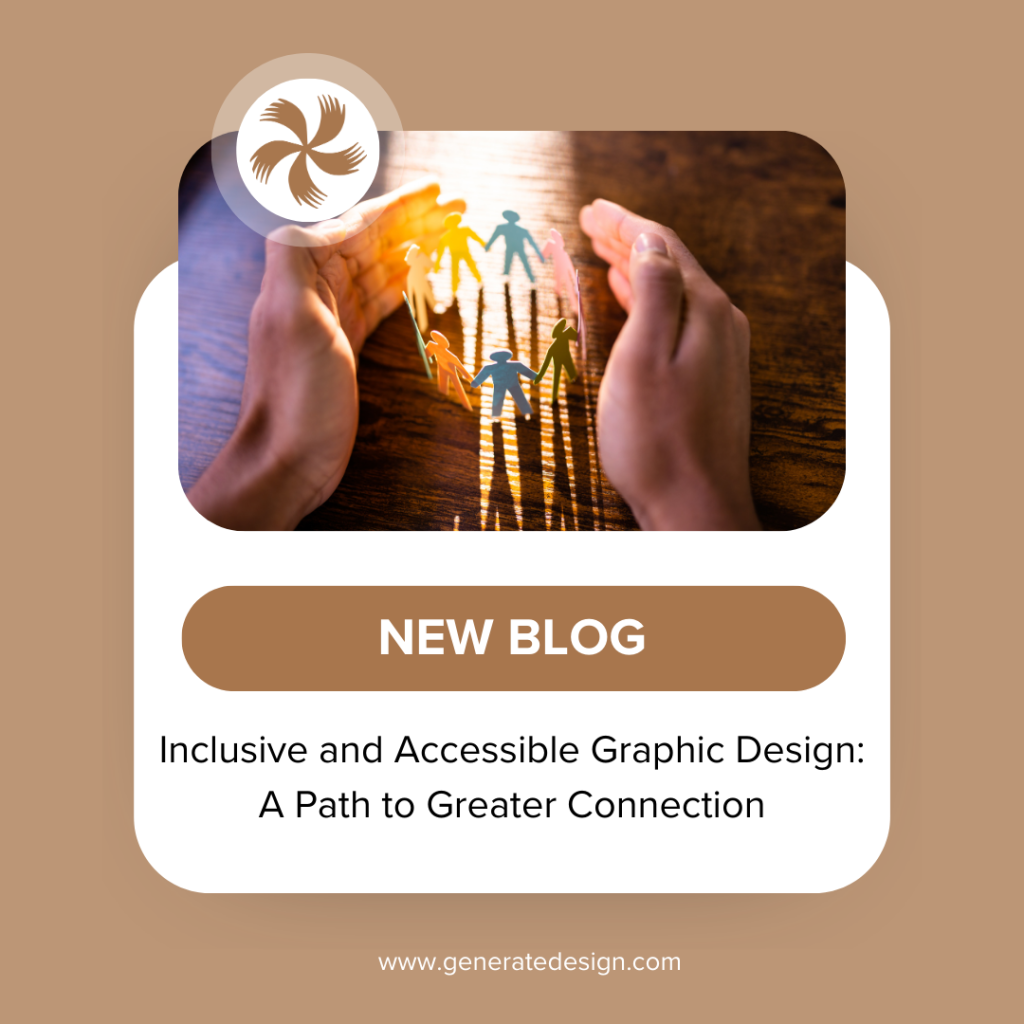
In the evolving world of graphic design, inclusivity and accessibility are no longer just buzzwords but key principles that guide the creation of visual content. Inclusive and accessible graphic design ensures that all users, regardless of their abilities, can interact with and enjoy a brand’s message. By prioritizing these principles, designers not only comply with legal standards but also foster a sense of belonging and respect among diverse audiences.
Inclusive design starts with understanding and acknowledging the wide range of human diversity. This includes designing for different ages, abilities, genders, and cultural backgrounds. It’s about moving away from one-size-fits-all approaches and creating visuals that resonate with a broader audience. Designers should aim to represent different perspectives and experiences, making everyone feel seen and valued.
Accessibility in graphic design, on the other hand, focuses on ensuring that visual content is perceivable, operable, and understandable for people with disabilities. This involves considering various aspects such as color contrast, font size, and readability. For example, using high contrast colors can help individuals with visual impairments, while clear and straightforward typography can aid those with cognitive disabilities. Additionally, providing alternative text for images ensures that visually impaired users can understand the content through screen readers. By using these elements, designers create more inclusive experiences that enhance usability for everyone.
Embracing inclusive and accessible graphic design also makes good business sense. Brands that prioritize these principles can reach a wider audience, improve customer satisfaction, and build stronger loyalty. Moreover, as more consumers seek out companies that align with their values, demonstrating a commitment to inclusivity and accessibility can differentiate a brand in a crowded market. Ultimately, when graphic designers embed these values into their work, they contribute to a more equitable and connected digital landscape, where everyone can engage and participate fully.
Inclusive and accessible graphic design is about more than just compliance; it’s a commitment to creating a world where every individual feels represented and valued. By understanding the diverse needs of their audience and implementing thoughtful design practices, graphic designers can make a profound impact. As we move forward, let’s embrace these principles, ensuring our designs not only meet standards but also inspire and include all members of our global community.
Inclusive Design
Inclusive Design
Inclusive Design, Inclusive Design, Inclusive Design. Inclusive Design, Inclusive Design, Inclusive Design.
Inclusive Design, Inclusive Design, Inclusive Design. Inclusive Design, Inclusive Design, Inclusive Design.
Inclusive Design, Inclusive Design, Inclusive Design. Inclusive Design, Inclusive Design, Inclusive Design.
Inclusive Design, Inclusive Design, Inclusive Design. Inclusive Design, Inclusive Design, Inclusive Design.
Inclusive Design, Inclusive Design, Inclusive Design. Inclusive Design, Inclusive Design, Inclusive Design.
Inclusive Design, Inclusive Design, Inclusive Design. Inclusive Design, Inclusive Design, Inclusive Design.

Maintained by Generate Design.
In the evolving world of graphic design, inclusivity and accessibility are no longer just buzzwords but key principles that guide the creation of visual content. Inclusive and accessible graphic design ensures that all users, regardless of their abilities, can interact with and enjoy a brand’s message. By prioritizing these principles, designers not only comply with legal standards but also foster a sense of belonging and respect among diverse audiences.
Inclusive design starts with understanding and acknowledging the wide range of human diversity. This includes designing for different ages, abilities, genders, and cultural backgrounds. It’s about moving away from one-size-fits-all approaches and creating visuals that resonate with a broader audience. Designers should aim to represent different perspectives and experiences, making everyone feel seen and valued.
Accessibility in graphic design, on the other hand, focuses on ensuring that visual content is perceivable, operable, and understandable for people with disabilities. This involves considering various aspects such as color contrast, font size, and readability. For example, using high contrast colors can help individuals with visual impairments, while clear and straightforward typography can aid those with cognitive disabilities. Additionally, providing alternative text for images ensures that visually impaired users can understand the content through screen readers. By using these elements, designers create more inclusive experiences that enhance usability for everyone.
Embracing inclusive and accessible graphic design also makes good business sense. Brands that prioritize these principles can reach a wider audience, improve customer satisfaction, and build stronger loyalty. Moreover, as more consumers seek out companies that align with their values, demonstrating a commitment to inclusivity and accessibility can differentiate a brand in a crowded market. Ultimately, when graphic designers embed these values into their work, they contribute to a more equitable and connected digital landscape, where everyone can engage and participate fully.
Inclusive and accessible graphic design is about more than just compliance; it’s a commitment to creating a world where every individual feels represented and valued. By understanding the diverse needs of their audience and implementing thoughtful design practices, graphic designers can make a profound impact. As we move forward, let’s embrace these principles, ensuring our designs not only meet standards but also inspire and include all members of our global community.
In the evolving world of graphic design, inclusivity and accessibility are no longer just buzzwords but key principles that guide the creation of visual content. Inclusive and accessible graphic design ensures that all users, regardless of their abilities, can interact with and enjoy a brand’s message. By prioritizing these principles, designers not only comply with legal standards but also foster a sense of belonging and respect among diverse audiences.
Inclusive design starts with understanding and acknowledging the wide range of human diversity. This includes designing for different ages, abilities, genders, and cultural backgrounds. It’s about moving away from one-size-fits-all approaches and creating visuals that resonate with a broader audience. Designers should aim to represent different perspectives and experiences, making everyone feel seen and valued.
Accessibility in graphic design, on the other hand, focuses on ensuring that visual content is perceivable, operable, and understandable for people with disabilities. This involves considering various aspects such as color contrast, font size, and readability. For example, using high contrast colors can help individuals with visual impairments, while clear and straightforward typography can aid those with cognitive disabilities. Additionally, providing alternative text for images ensures that visually impaired users can understand the content through screen readers. By using these elements, designers create more inclusive experiences that enhance usability for everyone.
Embracing inclusive and accessible graphic design also makes good business sense. Brands that prioritize these principles can reach a wider audience, improve customer satisfaction, and build stronger loyalty. Moreover, as more consumers seek out companies that align with their values, demonstrating a commitment to inclusivity and accessibility can differentiate a brand in a crowded market. Ultimately, when graphic designers embed these values into their work, they contribute to a more equitable and connected digital landscape, where everyone can engage and participate fully.
Inclusive and accessible graphic design is about more than just compliance; it’s a commitment to creating a world where every individual feels represented and valued. By understanding the diverse needs of their audience and implementing thoughtful design practices, graphic designers can make a profound impact. As we move forward, let’s embrace these principles, ensuring our designs not only meet standards but also inspire and include all members of our global community.
In the evolving world of graphic design, inclusivity and accessibility are no longer just buzzwords but key principles that guide the creation of visual content. Inclusive and accessible graphic design ensures that all users, regardless of their abilities, can interact with and enjoy a brand’s message. By prioritizing these principles, designers not only comply with legal standards but also foster a sense of belonging and respect among diverse audiences.
Inclusive design starts with understanding and acknowledging the wide range of human diversity. This includes designing for different ages, abilities, genders, and cultural backgrounds. It’s about moving away from one-size-fits-all approaches and creating visuals that resonate with a broader audience. Designers should aim to represent different perspectives and experiences, making everyone feel seen and valued.
Accessibility in graphic design, on the other hand, focuses on ensuring that visual content is perceivable, operable, and understandable for people with disabilities. This involves considering various aspects such as color contrast, font size, and readability. For example, using high contrast colors can help individuals with visual impairments, while clear and straightforward typography can aid those with cognitive disabilities. Additionally, providing alternative text for images ensures that visually impaired users can understand the content through screen readers. By using these elements, designers create more inclusive experiences that enhance usability for everyone.
Embracing inclusive and accessible graphic design also makes good business sense. Brands that prioritize these principles can reach a wider audience, improve customer satisfaction, and build stronger loyalty. Moreover, as more consumers seek out companies that align with their values, demonstrating a commitment to inclusivity and accessibility can differentiate a brand in a crowded market. Ultimately, when graphic designers embed these values into their work, they contribute to a more equitable and connected digital landscape, where everyone can engage and participate fully.
Inclusive and accessible graphic design is about more than just compliance; it’s a commitment to creating a world where every individual feels represented and valued. By understanding the diverse needs of their audience and implementing thoughtful design practices, graphic designers can make a profound impact. As we move forward, let’s embrace these principles, ensuring our designs not only meet standards but also inspire and include all members of our global community.
In the evolving world of graphic design, inclusivity and accessibility are no longer just buzzwords but key principles that guide the creation of visual content. Inclusive and accessible graphic design ensures that all users, regardless of their abilities, can interact with and enjoy a brand’s message. By prioritizing these principles, designers not only comply with legal standards but also foster a sense of belonging and respect among diverse audiences.
Inclusive design starts with understanding and acknowledging the wide range of human diversity. This includes designing for different ages, abilities, genders, and cultural backgrounds. It’s about moving away from one-size-fits-all approaches and creating visuals that resonate with a broader audience. Designers should aim to represent different perspectives and experiences, making everyone feel seen and valued.
Accessibility in graphic design, on the other hand, focuses on ensuring that visual content is perceivable, operable, and understandable for people with disabilities. This involves considering various aspects such as color contrast, font size, and readability. For example, using high contrast colors can help individuals with visual impairments, while clear and straightforward typography can aid those with cognitive disabilities. Additionally, providing alternative text for images ensures that visually impaired users can understand the content through screen readers. By using these elements, designers create more inclusive experiences that enhance usability for everyone.
Embracing inclusive and accessible graphic design also makes good business sense. Brands that prioritize these principles can reach a wider audience, improve customer satisfaction, and build stronger loyalty. Moreover, as more consumers seek out companies that align with their values, demonstrating a commitment to inclusivity and accessibility can differentiate a brand in a crowded market. Ultimately, when graphic designers embed these values into their work, they contribute to a more equitable and connected digital landscape, where everyone can engage and participate fully.
Inclusive and accessible graphic design is about more than just compliance; it’s a commitment to creating a world where every individual feels represented and valued. By understanding the diverse needs of their audience and implementing thoughtful design practices, graphic designers can make a profound impact. As we move forward, let’s embrace these principles, ensuring our designs not only meet standards but also inspire and include all members of our global community.
In the evolving world of graphic design, inclusivity and accessibility are no longer just buzzwords but key principles that guide the creation of visual content. Inclusive and accessible graphic design ensures that all users, regardless of their abilities, can interact with and enjoy a brand’s message. By prioritizing these principles, designers not only comply with legal standards but also foster a sense of belonging and respect among diverse audiences.
Inclusive design starts with understanding and acknowledging the wide range of human diversity. This includes designing for different ages, abilities, genders, and cultural backgrounds. It’s about moving away from one-size-fits-all approaches and creating visuals that resonate with a broader audience. Designers should aim to represent different perspectives and experiences, making everyone feel seen and valued.
Accessibility in graphic design, on the other hand, focuses on ensuring that visual content is perceivable, operable, and understandable for people with disabilities. This involves considering various aspects such as color contrast, font size, and readability. For example, using high contrast colors can help individuals with visual impairments, while clear and straightforward typography can aid those with cognitive disabilities. Additionally, providing alternative text for images ensures that visually impaired users can understand the content through screen readers. By using these elements, designers create more inclusive experiences that enhance usability for everyone.
Embracing inclusive and accessible graphic design also makes good business sense. Brands that prioritize these principles can reach a wider audience, improve customer satisfaction, and build stronger loyalty. Moreover, as more consumers seek out companies that align with their values, demonstrating a commitment to inclusivity and accessibility can differentiate a brand in a crowded market. Ultimately, when graphic designers embed these values into their work, they contribute to a more equitable and connected digital landscape, where everyone can engage and participate fully.
Inclusive and accessible graphic design is about more than just compliance; it’s a commitment to creating a world where every individual feels represented and valued. By understanding the diverse needs of their audience and implementing thoughtful design practices, graphic designers can make a profound impact. As we move forward, let’s embrace these principles, ensuring our designs not only meet standards but also inspire and include all members of our global community.
Inclusive design starts with understanding and acknowledging the wide range of human diversity. This includes designing for different ages, abilities, genders, and cultural backgrounds. It’s about moving away from one-size-fits-all approaches and creating visuals that resonate with a broader audience. Designers should aim to represent different perspectives and experiences, making everyone feel seen and valued.
Accessibility in graphic design, on the other hand, focuses on ensuring that visual content is perceivable, operable, and understandable for people with disabilities. This involves considering various aspects such as color contrast, font size, and readability. For example, using high contrast colors can help individuals with visual impairments, while clear and straightforward typography can aid those with cognitive disabilities. Additionally, providing alternative text for images ensures that visually impaired users can understand the content through screen readers. By using these elements, designers create more inclusive experiences that enhance usability for everyone.
Embracing inclusive and accessible graphic design also makes good business sense. Brands that prioritize these principles can reach a wider audience, improve customer satisfaction, and build stronger loyalty. Moreover, as more consumers seek out companies that align with their values, demonstrating a commitment to inclusivity and accessibility can differentiate a brand in a crowded market. Ultimately, when graphic designers embed these values into their work, they contribute to a more equitable and connected digital landscape, where everyone can engage and participate fully.
Inclusive and accessible graphic design is about more than just compliance; it’s a commitment to creating a world where every individual feels represented and valued. By understanding the diverse needs of their audience and implementing thoughtful design practices, graphic designers can make a profound impact. As we move forward, let’s embrace these principles, ensuring our designs not only meet standards but also inspire and include all members of our global community.